


Aviation exchange management rarely follows the clean path assumed in many ERP workflows. A core can arrive late, a customer can send back a different component, or a unit already sitting in your facility can become the exchange core after inspection. However the transaction changes, the system still has to preserve the part, order, receipt, credit, and invoice history.
When it cannot, your team turns the transaction into a manual reconstruction exercise. Sales adds notes, inventory updates the part record, repairs adds context, and billing waits for an explanation. That is where exchange exceptions create lost productivity, billing delay, and missed charges.
Many ERP systems treat an exchange as one part out and one part back. Aviation parts trading and MRO work do not stay that tidy for long, because commercial decisions, warehouse movement, repair status, quality review, and billing often happen at different speeds.
The core may not be identified when the order is opened. A component may already be in your operation before it becomes the core tied to an exchange. A customer may authorize an outright purchase after the returned unit is reviewed. These are normal aftermarket scenarios.
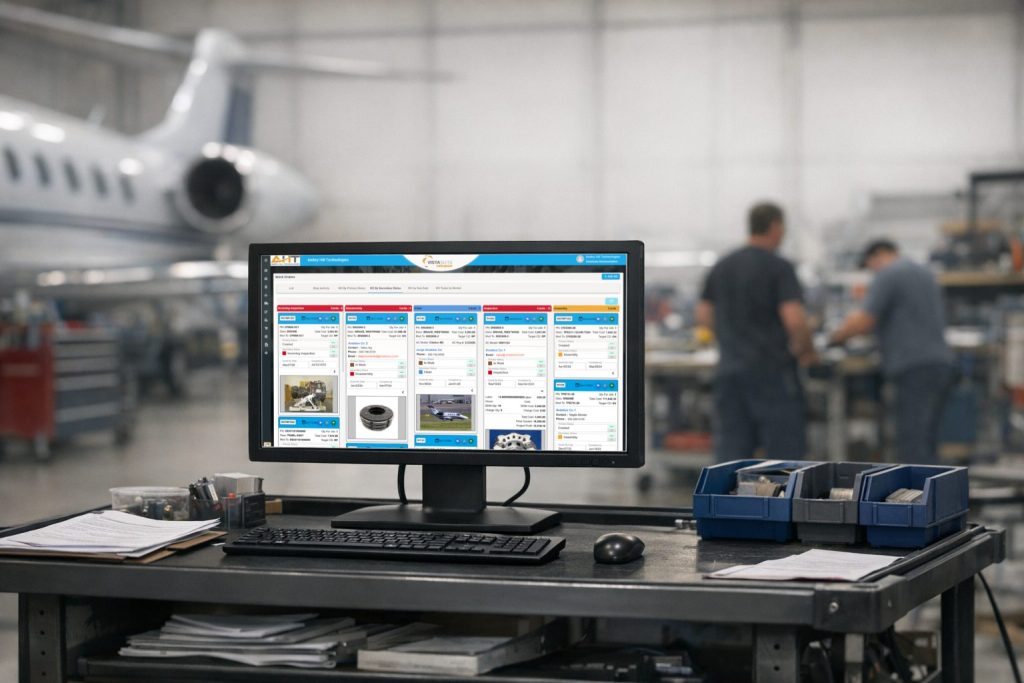
Where Exchange Workarounds Break Transaction Continuity
Transaction Context Scatters
The first warning sign is duplicate context. When the order, part record, repair note, receiving step, and invoice do not carry the same exchange story, staff have to explain the transaction repeatedly. Each explanation becomes a substitute for system history.
The risk increases when a main component already in your operation becomes the exchange core mid-transaction. A system that forces cancellation, manual rebilling, or side spreadsheets may get the transaction closed, but it leaves the next person to interpret what really happened.
Transaction Type Changes Need a Clean Path
Exchange transactions can turn into outright sales after the core is received, reviewed, or rejected. That change affects the customer record, inventory position, core expectation, and invoice handling, so it needs to move through the transaction record instead of sitting in a note outside the order.
When the original exchange decision is treated as fixed, the team has to unwind one transaction and rebuild another. That creates ambiguity for everyone downstream: billing may not know whether the core credit still applies, while operations may not know whether the part should be held, repaired, or released.
Credits Need the Same Operational Trail
Core credits are tied to the physical return, the condition of the part, the original transaction, and the cost assumptions used when the order was created. After the core comes back, billing needs that trail before invoice review.
If the history lives in notes, emails, and individual memory, the credit process becomes slower and more error-prone. A clean operational trail protects margin, reduces rework, and gives sales, operations, and billing the same version of the transaction.
The Hidden Cost Is Rework
Most teams can handle exceptions. The problem is handling the same type of exception with a different workaround every time.
One customer needs a special exchange note, another requires a separate folder, and a third has a billing rule a senior employee remembers. Those workarounds may keep transactions moving, but they also create training burden, expert dependency, and inconsistent billing review.
That rework shows up in repeated searches, status chasing, duplicated entries, delayed credits, and invoices held for clarification. Across enough transactions, it becomes a measurable drag on throughput and customer service.
What Your Exchange Workflow Should Preserve
A stronger exchange workflow keeps the operational record intact as the transaction changes. Your team should be able to see what was promised, what was received, what changed, which charges apply, and why the invoice or credit is being handled that way.
Three workflow questions usually expose the gap:
- Can the exchange core change without rebuilding the transaction?
- Can an exchange become an outright sale without detached manual work?
- Can billing see the part, core, repair, and credit context before review?
When the process lives partly outside the system. That makes each exception harder to review, train, and repeat consistently.

How Vista-Suite Enterprise Supports Cleaner Exchange Control
Vista-Suite Enterprise is built for aviation aftermarket operations that need connected ERP workflows across inventory, sales orders, repair orders, purchase orders, invoicing, shipping and receiving, digital records, dashboards, reports, and mobile execution.
For aviation exchange management, that connected workflow coverage matters because exchange exceptions touch more than one department. Your team needs the part, order, core, repair, receipt, credit, and invoice context to stay tied together as facts change.
Vista-Suite Enterprise helps your team manage those workflows in one platform instead of relying on detached notes, repeated data entry, and after-the-fact billing reconstruction. When exchange handling stays connected to the surrounding transaction history, your staff can move faster, protect margin, and give customers clearer answers.
Schedule a live demo and bring the exchange cases that create the most rework in your operation.
FAQ
What makes aviation exchange management difficult?
Aviation exchanges often change after the original order is opened. Cores may arrive late, condition issues may appear during inspection, and a transaction may shift from exchange to outright sale. The workflow is difficult when the ERP cannot preserve context as those changes happen.
How do exchange exceptions create missed charges?
Missed charges can occur when charges, credits, repairs, or core-related costs are separated from the part, line, order, or invoice history. Billing then has to rebuild context from notes and messages, which increases the risk that a charge or credit is missed.
What should aviation aftermarket companies look for in exchange workflow software?
Look for connected workflows across inventory, orders, repairs, receiving, invoicing, digital records, reporting, and mobile execution. The system should preserve transaction history as the exchange changes instead of forcing staff to cancel, recreate, or explain the same work in multiple places.