


Standardize Repeat Repairs Without Forcing Every Job Into the Same Mold
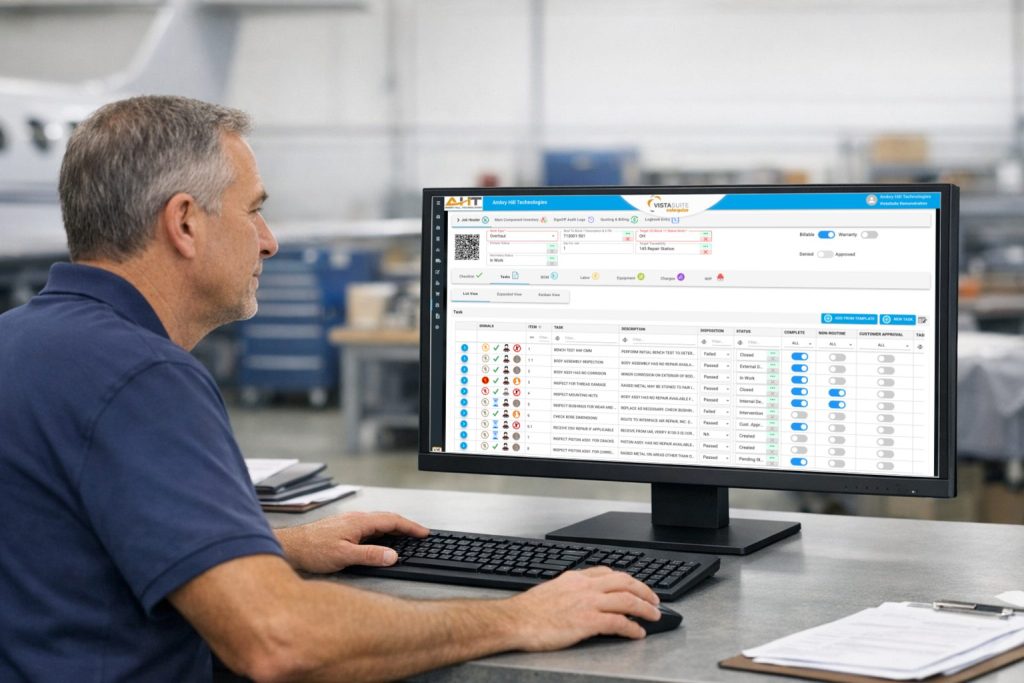
See how part-aware Work Order templates can help aviation MRO planners standardize repeat repairs while keeping each job aligned with its current scope.
The Real Test of Aviation ERP/MRO Software: Transaction Continuity
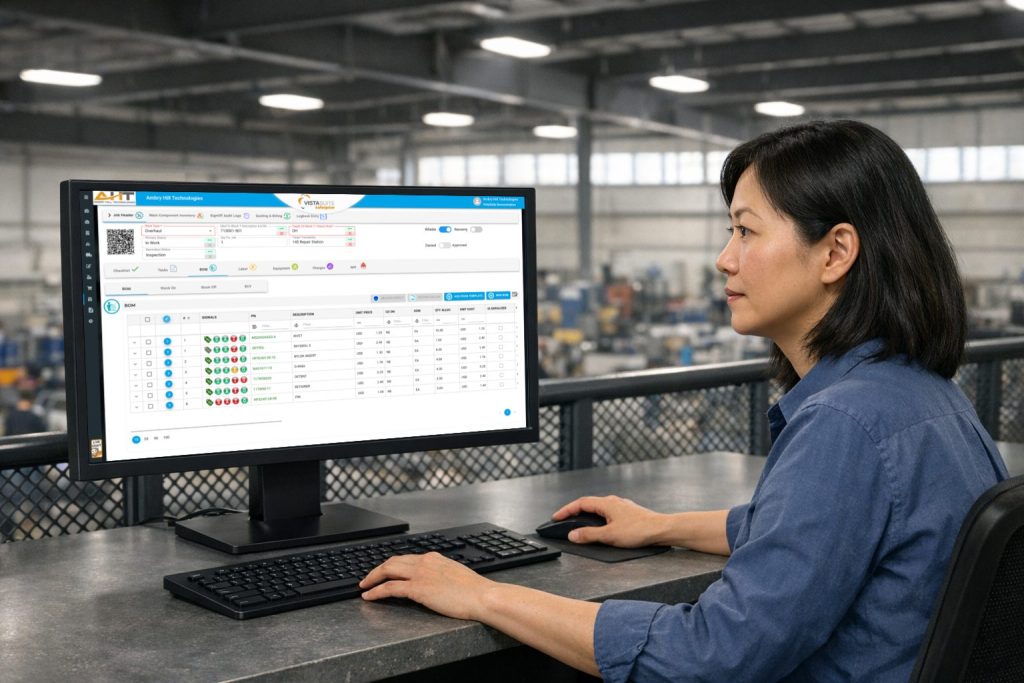
Aviation aftermarket and MRO leaders want to know whether ERP software can preserve a changing exchange from quote through receiving, repair, export review, and billing without duplicate entry or lost transaction detail.
Vista-Suite Enterprise Preserves Transaction Integrity: Vista-Suite Enterprise keeps return-core expectations, alternate-part options, costs, credits, and replacement charges inside the exchange transaction. Related inventory and historical details remain accessible as the returned unit moves into inspection or repair.
Ambry Hill and MercOlogy Connect Aviation Operations to QuickBooks Online

Ambry Hill develops ERP/MRO workflows tailored for the aviation industry, supporting the operations that keep airlines and maintenance providers running smoothly. MercOlogy facilitates integration between different software systems, helping businesses minimize manual transfers and ensure seamless data flow across tools.
Together, they offer a robust solution for customers who aim to adopt Vista-Suite Enterprise for their operations while maintaining QuickBooks Online for accounting.
If your team enters transaction details in Vista-Suite Enterprise and then recreates them in QuickBooks Online, Ambry Hill and MercOlogy can help you evaluate the integration path.
How to Modernize Aviation MRO Operations
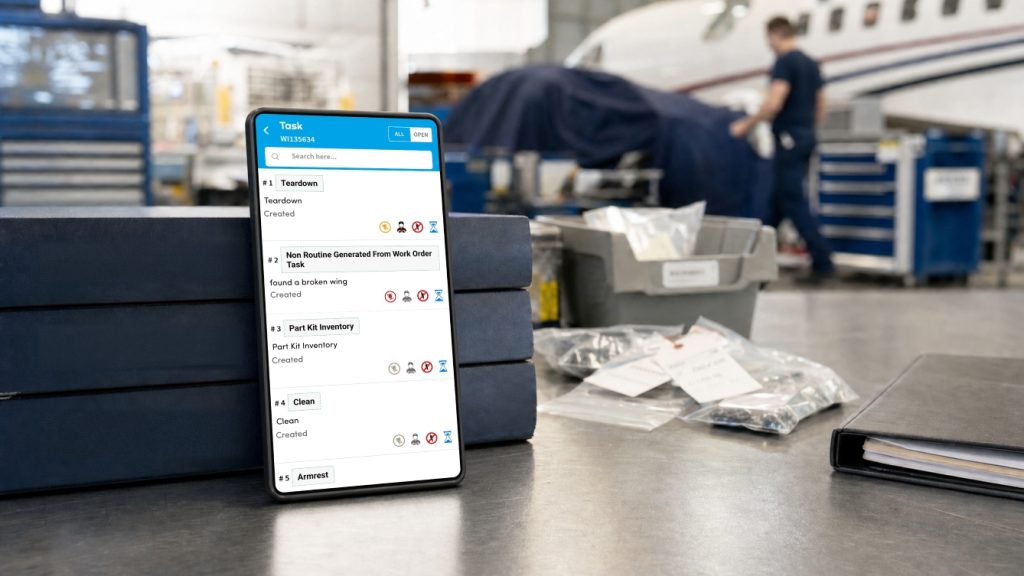
Vista-Suite Enterprise lets your team record labor, add parts and materials to the Bill of Materials (BOM), and enter charges such as freight directly on the main work order without creating separate tasks. These costs appear in the work-in-progress (WIP) log alongside costs entered on individual repair tasks.
Technicians can open job checklists in the Vista-Suite Enterprise mobile app, follow the required steps, and quickly record their time. If repair steps need separate assignments or documentation, the shop can create a task for it. Otherwise, the technician can record labor directly on the job.
Vista-Suite Enterprise records labor across the operation, not just on work orders. For example, time can be tied to sales orders, inventory records, stand-alone activities, and more. This keeps customer work separate from internal shop activity, shows managers where hours are actually being spent, and removes the need for administrative work orders created solely to capture time.
Quoting and invoicing remain connected to the work-order process, so costs can be reviewed with the job information still attached.
Aviation Document Management: Keep Paper, Remove Delay
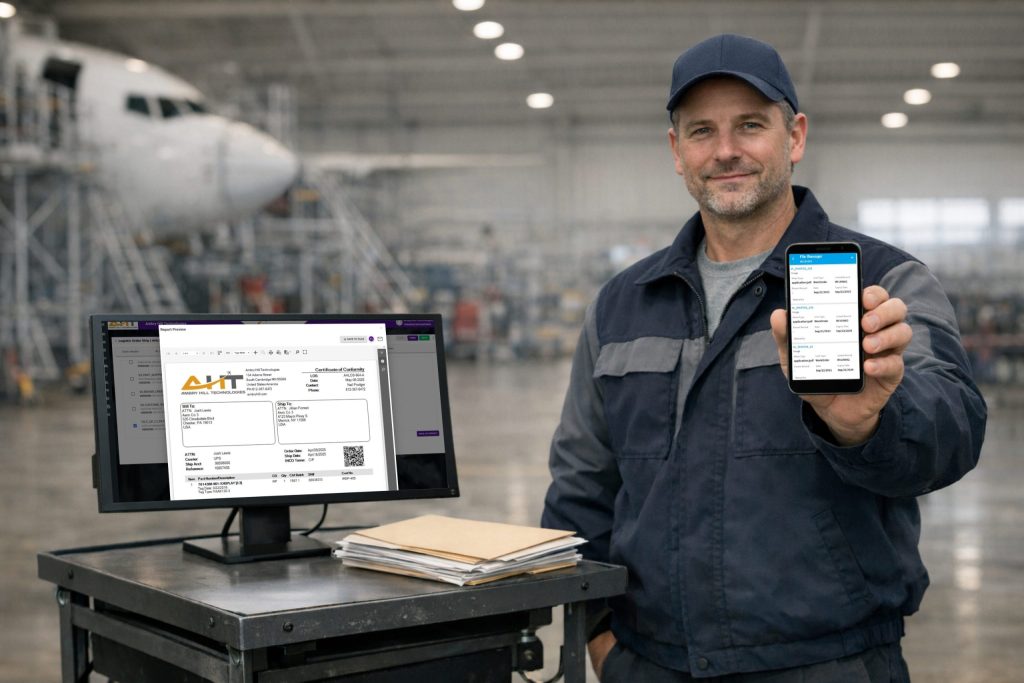
Aviation aftermarket and MRO leaders want to digitize document handling without disrupting paper-based receiving, inspection, maintenance, quality, and shipping practices. They are looking for faster retrieval, stronger traceability, current controlled documents, and fewer disconnected file repositories.
ERP Software That Manages Inventory the Way Your Warehouse Team Actually Thinks
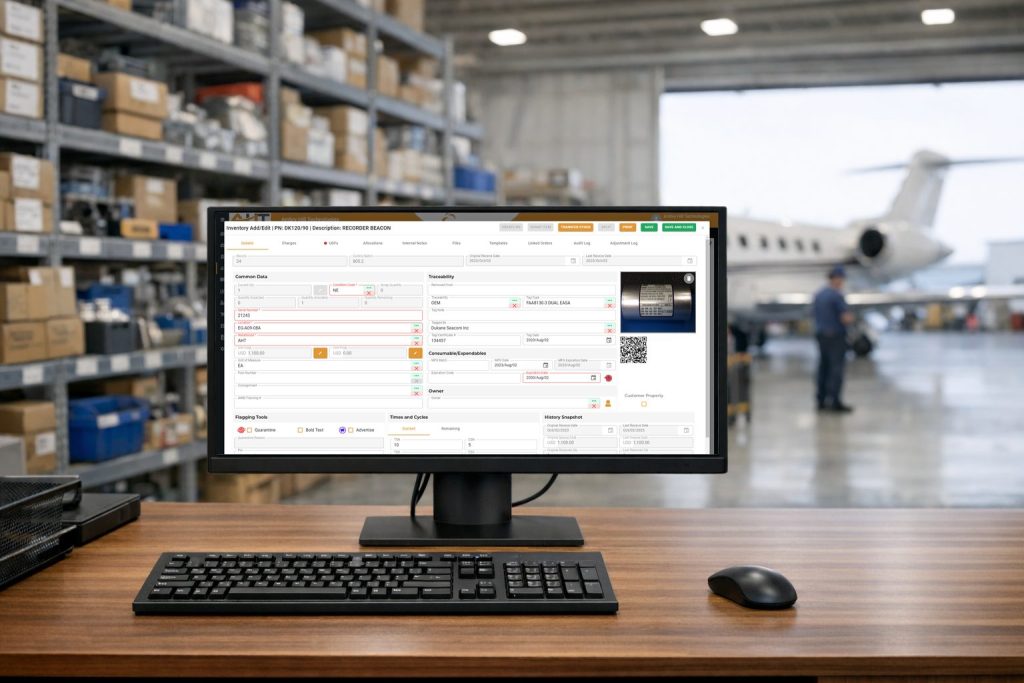
How should customer-owned aircraft parts be managed?
Ownership should be visible on the inventory record and remain clear as the material moves through receiving, repair, work orders, storage, and return. Notes maintained outside the normal workflow are easy to miss.
Vista-Suite Enterprise supports aircraft parts inventory, purchase order, repair order, receiving, and reporting workflows in one platform. Its inventory views quickly surface regular inventory alongside alternate records, pending inbound material, and pool primary records. Historical views remain accessible from the part or inventory record, reducing the need to leave the working area for routine research.
Customer-owned material clearly displays ownership identification to ensure clarity in consignment. Freight and other auxiliary charges can be applied directly to inventory records, so the cost details remain connected to the item and its workflow.
With Vista-Suite Enterprise, your warehouse gets fast answers to the questions that drive daily work: Is it available? Who owns it? What is pending? What has happened to it? What does it cost?
Aviation Transactions Move Faster with ERP Software That Keeps Pace
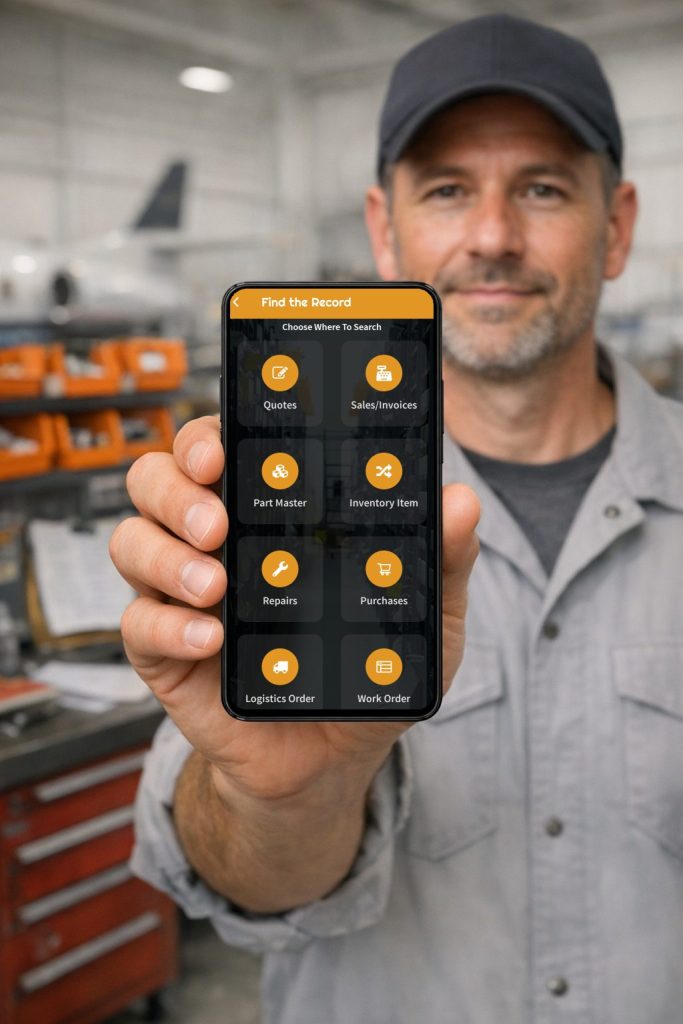
Vista-Suite Enterprise is a cloud-based aviation ERP/MRO platform built for parts traders, distributors, and Part 145 repair stations. It covers quotes, sales orders, purchase orders, repair orders, work orders, invoicing, shipping and receiving, labor tracking, mobile workflows, dashboards and reporting, digital file management, and Kanban-style workflows — all in one place.
That kind of coverage means your team works within the transaction instead of around it. Orders, repairs, shipments, receipts, invoices, files, and reports stay inside one aviation-focused system. Kanban views make transaction stages visible at a glance. Digital file management keeps supporting paperwork attached to the record it belongs to, and dashboards give leadership real visibility.
Trust the Transaction: Capturing Compliance at Every Step
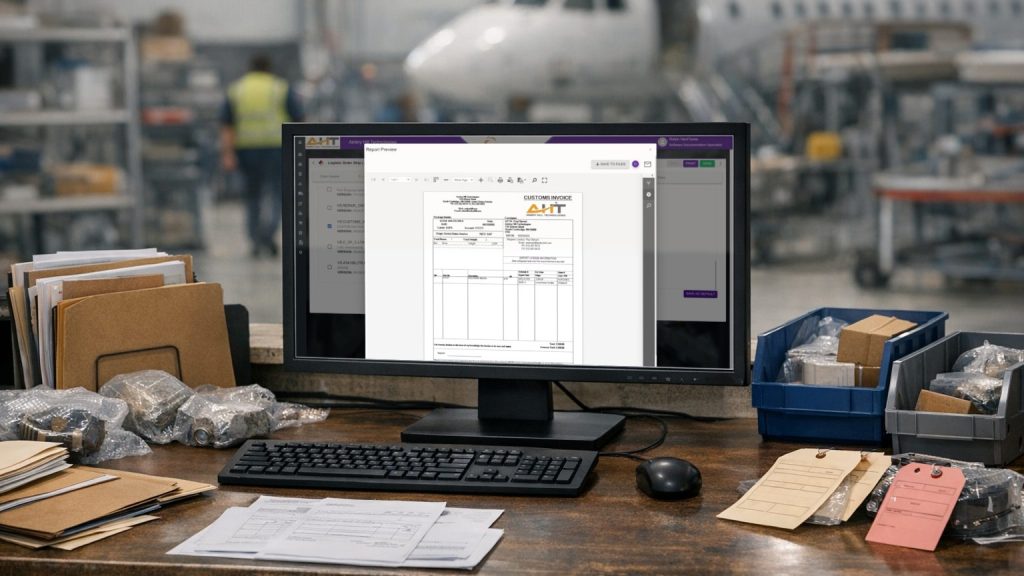
Vista-Suite Enterprise supports aviation ERP/MRO workflows for parts traders, distributors, and Part 145 repair stations, including export compliance tooling, digital record and file management, invoicing, shipping and receiving, role-based security, and mobile workflows.
Aviation Exchange Management: Why ERP Exceptions to the Norm Matter
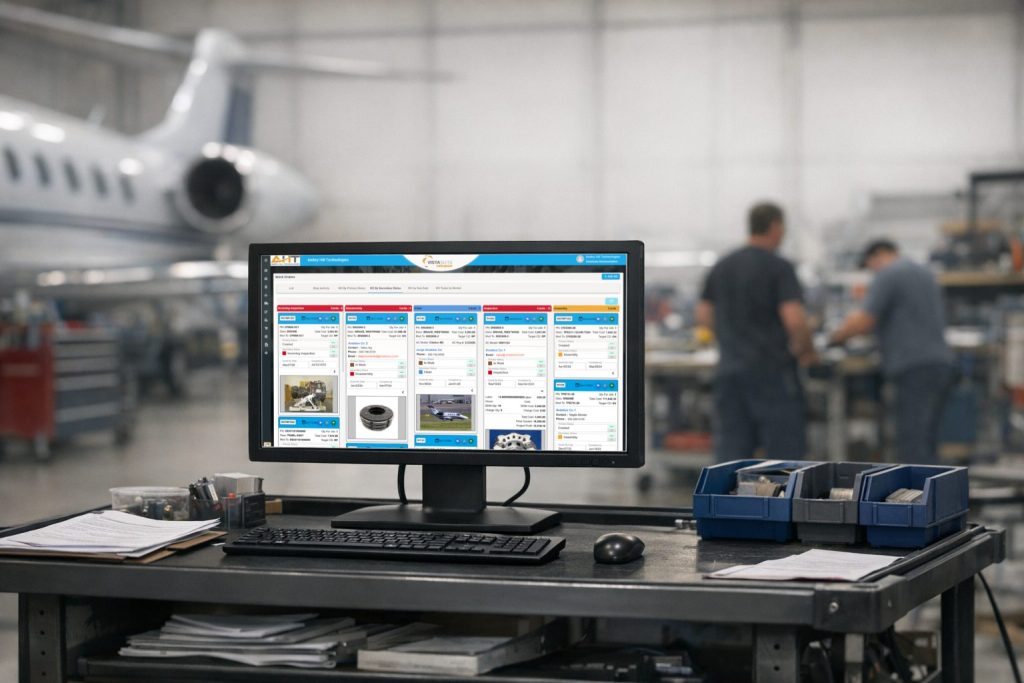
Vista-Suite Enterprise helps your team manage those workflows in one platform instead of relying on detached notes, repeated data entry, and after-the-fact billing reconstruction. When exchange handling stays connected to the surrounding transaction history, your staff can move faster, protect margin, and give customers clearer answers.
Billing Accuracy in Aviation Aftermarket Operations Starts Before the Invoice
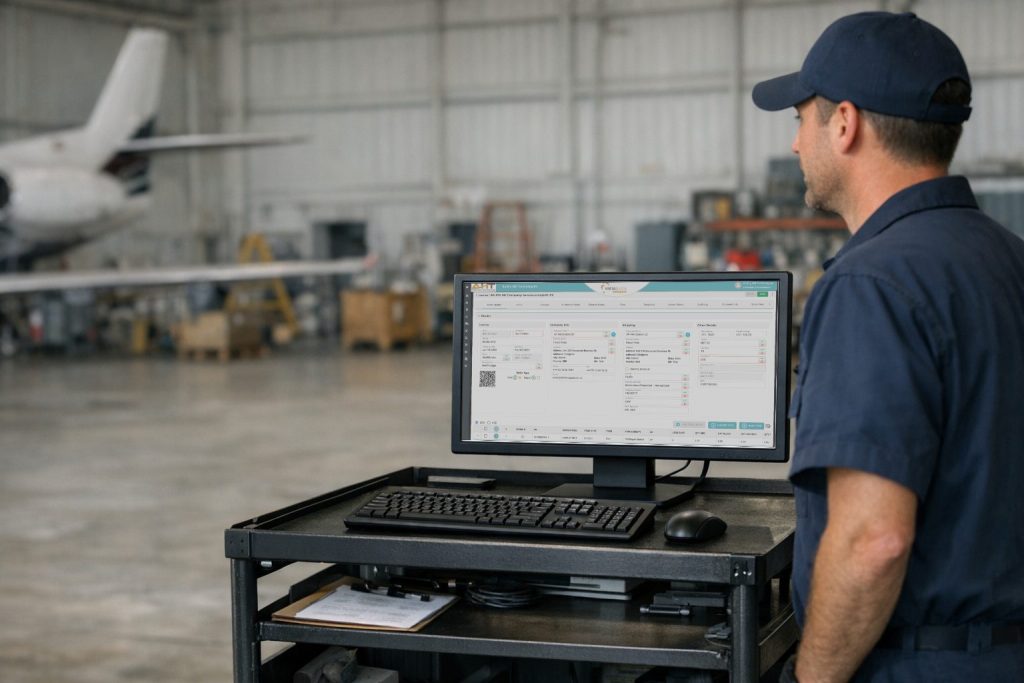
Billing accuracy in aviation aftermarket operations is not primarily an accounting problem. It is an operational workflow problem that begins when required charges are created, missed, separated from the relevant part, or entered after the transaction has already moved downstream.