


In aviation aftermarket operations, missed billing rarely starts with accounting. The first break usually happens earlier, when a part hits the line, a crate has to be built, freight changes, hazmat handling applies, a repair charge comes back, or a core issue creates an extra recovery item. By the time the invoice is prepared, the work has already happened. If the system has not captured the charge in context, someone has to remember it, find the paperwork, interpret the notes, and decide where it belongs.
Invoice control weakens when the final billing step depends on memory. In aircraft parts sales, exchange transactions, brokered repairs, inspections, and MRO support, chargeable events often happen away from the person who sends the final invoice.

The Charges Most Likely Overlooked Are the Ones Treated as Exceptions
Hazmat, crate build, freight, inspection, repair, core, and replacement charges are familiar enough that every operation recognizes them. Many systems still treat them as side items instead of normal parts of the transaction, so the process turns into a loose chain of reminders: a charge added manually, a note left for billing, a salesperson remembering the fee because the order was unusual enough to stand out. Across a full queue of shipments, repairs, returns, exchanges, and customer follow-ups, that loose chain does not hold.
Staff usually know the charge exists; the harder question is whether the information reaches the invoice in a structured way. If freight passthrough sits in one place, repair charges in another, and part-related charges in a generic charge area, the invoice depends on handoffs. Each handoff creates another place for aviation businesses to lose time, margin, and confidence.
A Generic Charge Code Does Not Tell the Operational Story
Part-related charges need to stay connected to the part, a basic operating principle that becomes harder to maintain when workflows separate the fee from the line item it belongs to. A repair charge, inspection charge, core charge, or replacement charge may be present on the invoice, but if it is not tied to the part number and visible in that part’s history, the organization loses context. Later, the charge looks like an accounting artifact instead of part of the aircraft parts workflow.
Aviation aftermarket teams do not manage generic revenue lines in isolation. They manage part numbers, condition, traceability, repair status, customer commitments, supplier actions, and fulfillment history. When a charge is disconnected from that record, future decisions get weaker. The billing team may have the amount right, but the business loses the history behind it.
After-the-Fact Billing Creates Rework Even When the Charge Is Recovered
Counting only the charges that never make it to the invoice understates the cost. Even when the charge is eventually recovered, the process can burn time across several roles. Someone asks whether freight was billable. Someone else checks the shipment. A third person looks for the repair approval. If the charge is questioned, staff have to assemble the story from scattered evidence.
Where Vista-Suite Enterprise Changes the Billing Workflow
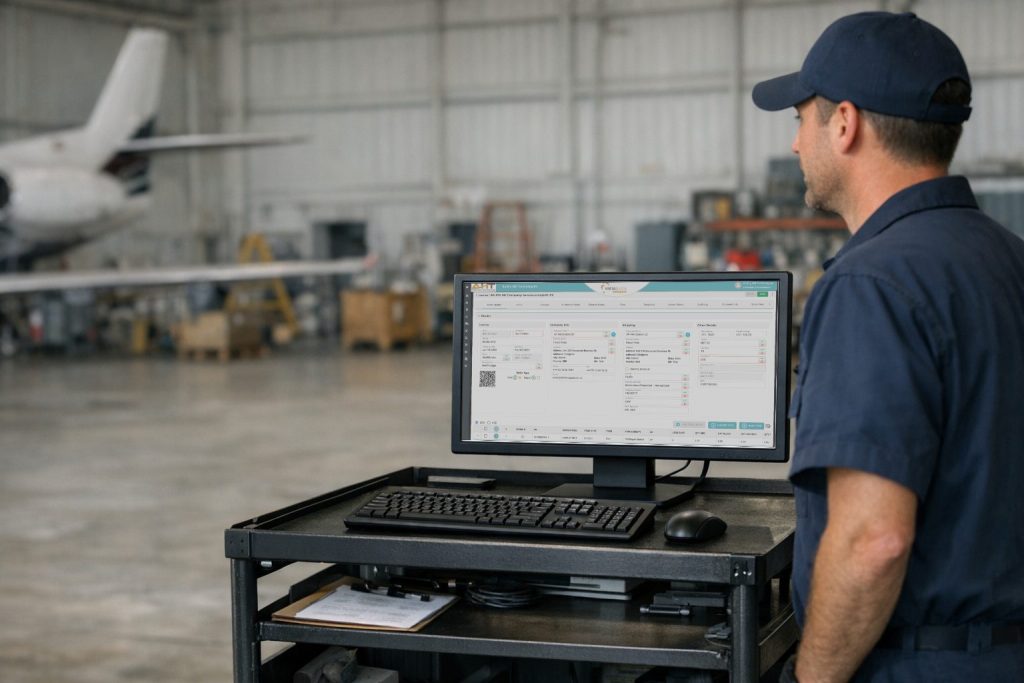
Vista-Suite Enterprise brings billing into the same operating path your team uses to manage parts, repairs, sales orders, work orders, shipping/receiving, and inventory. That gives the person preparing the invoice a usable trail from the work performed to the amount billed, without a separate cleanup pass. When freight, hazmat handling, inspection, repair, core, crate build, or replacement charges come up, your team can capture them closer to the work instead of passing them forward as notes for billing to interpret later.
On the invoice side, Vista-Suite Enterprise supports part-number-related charges, multiple charge types, freight and miscellaneous passthrough, line item traceability, linked-order visibility, and invoices created from sales orders. The charge can stay tied to the part, line, and related order that explain it. Billing does not have to chase the story after the work is done.
Billable items are easier to capture, customer questions are easier to answer, and managers get a clearer view of the work that produced the revenue. Request a Vista-Suite Enterprise demo at ambryhill.com/demo to review how your billing workflow handles the charges your team is already earning.
Why do aviation aftermarket companies miss billable charges?
They often miss charges because the chargeable event happens before invoicing and outside the accounting workflow. Freight changes, crate build, hazmat handling, inspection work, repair activity, and core issues may be known by different people in different areas. If those details are not captured in the transaction when they happen, billing depends on memory, notes, or manual follow-up.
What charges are commonly missed in aircraft parts and MRO billing?
Common missed or delayed charges include hazmat handling, freight passthrough, crate build, inspection, repair, over-and-above repair, core, and replacement charges. These are not unusual charges, but they are often treated as exceptions when systems do not connect them cleanly to the related part or order.
Why should charges be tied to part numbers?
Part-number linkage preserves operational context. When a repair, core, inspection, or replacement charge stays tied to the part number, future users can understand what happened on that transaction, review related history, and support the invoice more easily.
How does aviation ERP software help reduce billing leakage?
Aviation ERP software can help when it captures chargeable events inside the transaction workflow and carries them into invoicing without repeated entry. Stronger workflows keep charges connected to the relevant order, line item, part number, and transaction history.
Is billing leakage only an accounting issue?
No. Accounting may see the final invoice, but the missed charge usually begins earlier in operations. Warehouse, repair, sales, shipping, and customer support workflows all affect whether the right charges are visible when the invoice is prepared.