

Aviation compliance usually breaks in ordinary places: a ship-to address typed by hand, an ECCN copied from memory, an export note left in email, a customs value corrected after the shipment is packed. The policy may be sound, but the issue is that the person moving the transaction often does not have all the compliance context in front of them when making the decision.
For aircraft parts distributors, repair stations, teardown operations, and MRO teams, compliance has to travel with each part, company, line item, shipment, and invoice.
Audits Start with the Line Item
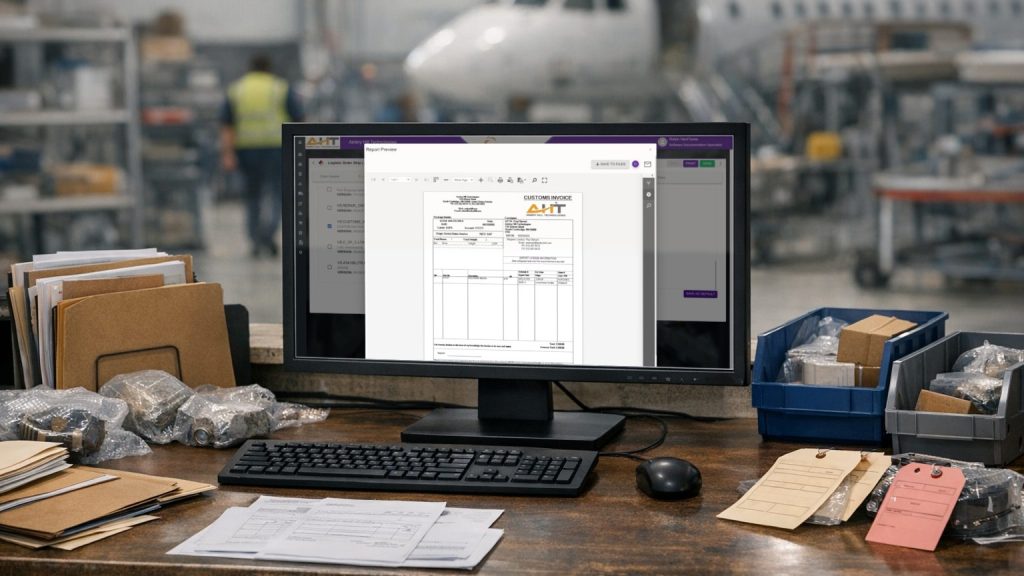
An audit rarely begins with the clean version of your process. It begins with a transaction that someone has to explain. Who entered the company? Which address was used? Was the part classified? Was the license current? Did the warehouse see the same restriction as the sales desk?
When the answers sit in separate places, the audit becomes a reconstruction exercise in which staff open old emails, search shared folders, ask who handled the order, and compare screenshots with printed forms. Transaction-level compliance reduces that scramble because evidence is created during the work, not assembled later from memory.
The Breakdowns Happen Between Normal Handoffs
Most compliance exposure in the aviation aftermarket stems from routine handoffs between teams, where each step has potential impacts on compliance.
Typically, sales initiates the process by entering a customer request and selecting the relevant part; purchasing confirms availability or explores repair options; the quality team reviews traceability records and documentation to ensure compliance; warehouse staff then picks, inspects, packs, and stages the item; shipping prepares labels and customs documentation; and finally, billing closes the transaction, completing the process.
Any deviation or addition can introduce compliance risks. Companies struggle to overcome compliance breakdowns because freeform data entry outside controlled records, like typing a company name, address, consignee, or notes, unintentionally bypasses screening and approval processes crucial for maintaining compliance.
Compliance Data Must Travel with the Work
Strong aviation operations keep compliance data close to the transaction. ECCN, HTS, ITAR, country of origin, civil or military controls, export screening status, licenses, INCO terms, warnings, clauses, and notes should be visible where staff quote, receive, ship, inspect, and invoice.
This visibility transforms behavior: office staff no longer need to guess whether the warehouse will encounter a restriction, warehouse teams can directly identify parts that require special handling without relying on separate messages, and shipping no longer has to reconstruct customs context from sales orders and spreadsheets.
The business consequences extend beyond audit risk, as disconnected compliance leads to slower turnaround, duplicate entry, avoidable rework, held shipments, customer service delays, and billing friction. When billing has to reconstruct whether freight, hazmat, inspection, repair, crate build, replacement, or core-related charges belong to the line, the revenue risk is deeply operational.
After-the-Fact Review Costs More Than It Appears
After-the-fact compliance review can make a business look controlled while leaving the work itself exposed. Someone catches the issue eventually, but after the transaction has already absorbed extra time.
A shipment delayed due to missing classification data impacts the customer, while a billing correction influences cash flow timing. When a quality document is chased after receipt, it hampers receiving throughput, and raising a screening question after providing a quote delays response time. These delays can also teach staff the wrong habits, leading them to believe that compliance issues are something another department should fix later. Implementing better systems can make it easier to follow the correct procedure within each transaction.
Vista-Suite Enterprise Keeps Compliance in the Workflow
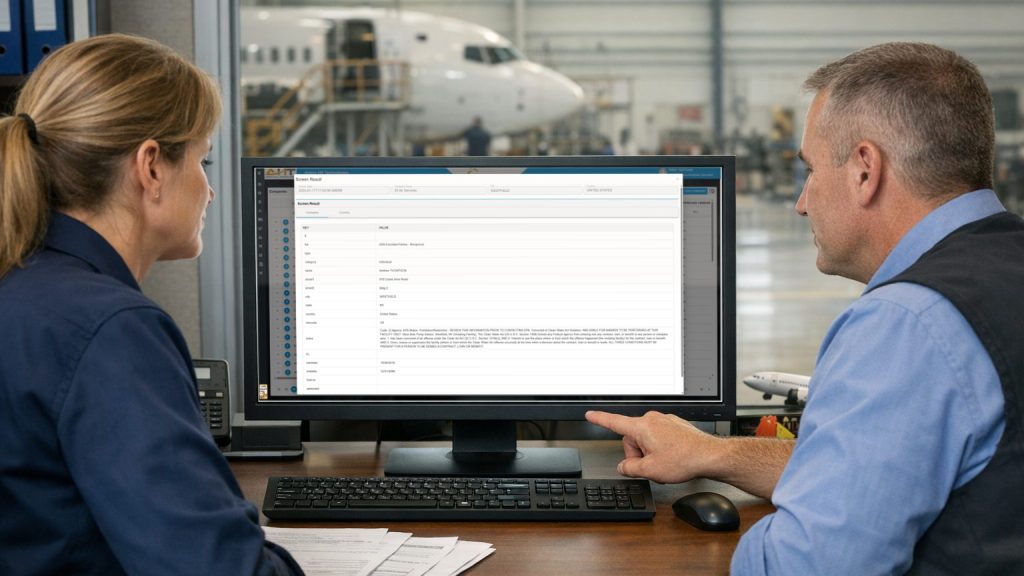
Vista-Suite Enterprise supports aviation ERP/MRO workflows for parts traders, distributors, and Part 145 repair stations, including export compliance tooling, digital record and file management, invoicing, shipping and receiving, role-based security, and mobile workflows. Vista-Suite Enterprise also supports export compliance screening workflows through Descartes VisualCompliance integration, available as a premium integration.
For compliance workflows, Vista-Suite Enterprise keeps compliance context close to the company, part, line item, logistics, and invoice process. Export and import details such as ECCN, HTS, ITAR, country of origin, INCO terms, and customs information can appear where teams receive, ship, document, and invoice. Compliance files can be tied to company or part records. Warnings, blocks, notes, screening history, and audit logs help your team document why a transaction proceeded or was stopped.
Company and contact controls can help your team select established ship-to, bill-to, and related parties instead of relying on uncontrolled freeform entry. Staff can review the compliance context before proceeding to ensure alignment. The shipping team has access to the necessary data for documentation, and billing can finalize the story post-transaction without rebuilding it.
To see Vista-Suite Enterprise against your specific workflow, schedule a demo at ambryhill.com/demo.
FAQ
What is transaction-level compliance in aviation aftermarket operations?
Transaction-level compliance means compliance data, warnings, documents, screening status, notes, and audit history stay tied to the actual part, company, line item, order, shipment, or invoice being worked. Staff see the context while the transaction is moving instead of looking for it after the fact.
Why is export compliance difficult in aircraft parts transactions?
Aircraft parts transactions often involve controlled classifications, multiple parties, end users, freight forwarders, country-specific details, customs documents, repair history, traceability, and time-sensitive shipment requirements. When those details live in separate systems or messages, teams can miss information during quote, order, receiving, shipping, or billing.
How can aviation ERP software support audit readiness?
Aviation ERP software can support audit readiness by keeping transaction history, digital files, screening records, warnings, approvals, notes, and forms connected to the records staff use every day. That does not replace a compliance program, but it reduces the need to reconstruct basic transaction context after the work is complete.
Why should ship-to and company records be controlled?
Controlled company and ship-to records reduce the chance that staff bypass screening or approval procedures by typing alternate names or addresses. In aviation aftermarket work, party identity, location, and transaction role can affect screening, export review, documentation, and fulfillment decisions.
What compliance data should stay tied to the part or line item?
Common examples include ECCN, HTS, ITAR status, country of origin, civil or military control indicators, customs value, license documentation, end-use certificates, INCO terms, inspection notes, traceability files, and transaction-specific warnings or clauses.