


One of the reasons aircraft parts inventory tracking is unique is that it can encompass items that are pending receipt, out for repair, assigned to a pool, reserved, or owned by a customer. It’s not uncommon for the warehouse team, when they receive a request, to check multiple screens, review transaction history, and consult other departments to clarify what the records truly indicate.
That is certainly a research bottleneck, but it also slows quotes, creates avoidable manual handling, complicates purchasing, and leaves finance rebuilding cost support after transactions have moved on. Effective aircraft parts inventory management keeps operational context attached to the inventory line where the next decision is made.
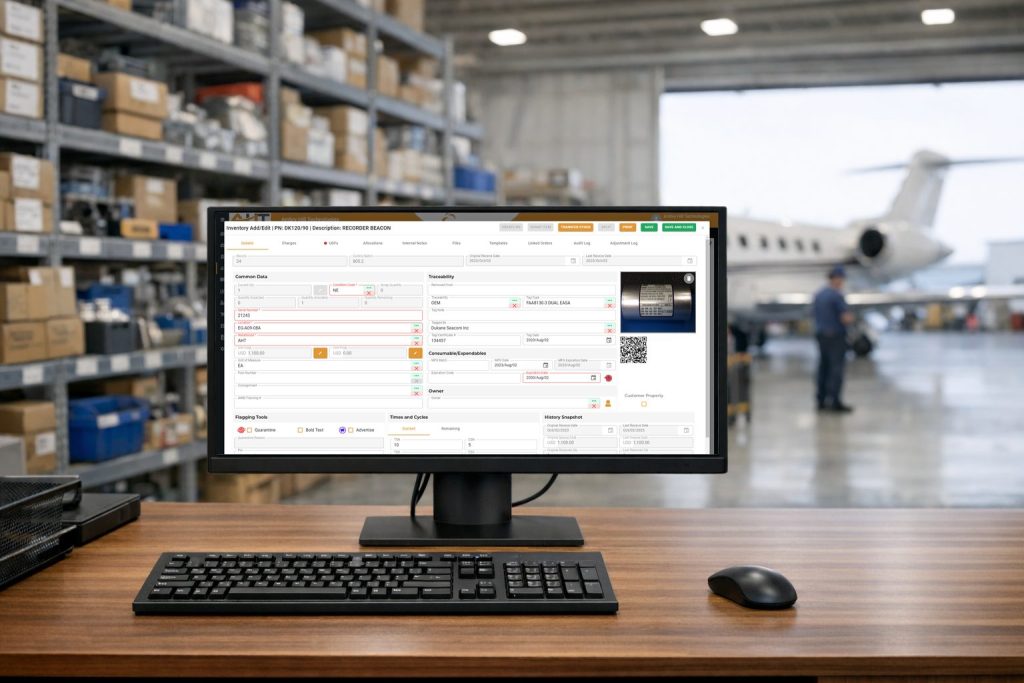
On-Hand Quantity Is Not the Same as Usable Inventory
Warehouse personnel need to know which units can be allocated now, which are expected on purchase orders, which are returning from repair, and which appear because a pool or lot is mixed into the view.
When those inventory classifications are buried, sales teams might quote materials that aren’t yet ready to ship; purchasing could source a different unit because incoming materials aren’t clearly visible; and an inventory manager could spend ten minutes verifying a quantity that should have been obvious at a glance.
It’s crucial for modern Enterprise Resource Planning (ERP) software to distinguish physical existence from operational availability.
Repeated Research Becomes Operational Delay
Fragmented inventory history causes small delays throughout the day. For instance, a salesperson may wonder whether a unit was received, while a technician needs to determine if a component originated from a customer job. Meanwhile, a warehouse employee might search through purchase, repair, receiving, and allocation records before moving an unfamiliar line item, which further slows the process.
Manual research might seem manageable, but its repetitive nature makes it burdensome, especially when seasoned employees serve as workflow process translators. Conversely, newer staff become stuck learning workarounds because software gaps prevent them from verifying records efficiently. When decisions depend on internal messages, tribal knowledge, or external spreadsheets that are not integrated into the transaction trail, the process becomes wildly inefficient.
Inventory history should clarify the origin, interactions, locations, and pending actions for the material. Bin assignments, barcode validation, physical counts, replenishment settings, and data like serial numbers, condition, shelf-life, or cycles provide this information. Employees require this context when handling, relocating, assigning, or researching items, and Vista-Suite Enterprise provides it seamlessly.
Ownership Must Be Clearly Observed
Customer-owned and consigned material creates a different challenge. The part may be in your warehouse, sent to an outside repair vendor, or issued against a work order, but possession does not establish ownership.
If ownership is stored in a note or a separate list, the distinction can disappear during an ordinary transaction where a line may be quoted, allocated, or moved without the employee seeing that another party owns it. Correcting the record later consumes warehouse, sales, accounting, and customer-service time. It can also force an uncomfortable conversation with the customer whose property was handled without complete context.
In Vista-Suite Enterprise, ownership is clearly tracked and follows the inventory record through every authorized movement. Flexibility matters, which is why Vista-Suite Enterprise allows customer property to be used in the authorized repair or maintenance workflow without being mistaken for company inventory.
Inventory Cost Must Reflect the Work Behind the Unit
The purchase price is only the beginning of an aircraft part’s cost. Freight, crate construction, inspection, outside repair, and internal labor are likely required before the unit is ready for sale or issue. When those charges live in emails, general ledger adjustments, or month-end worksheets, the inventory report understates the economic history of the item.
If finance must reconstruct the context after the warehouse work is complete, operations sees one cost, accounting defends another, and margin analysis depends on whether every charge was identified and assigned correctly.
That’s why, in Vista-Suite Enterprise, costs can be applied while the related inventory activity is still visible. Keeping auxiliary charges tied to the inventory record gives purchasing, sales, operations, and finance a common basis for reviewing cost and transaction history.
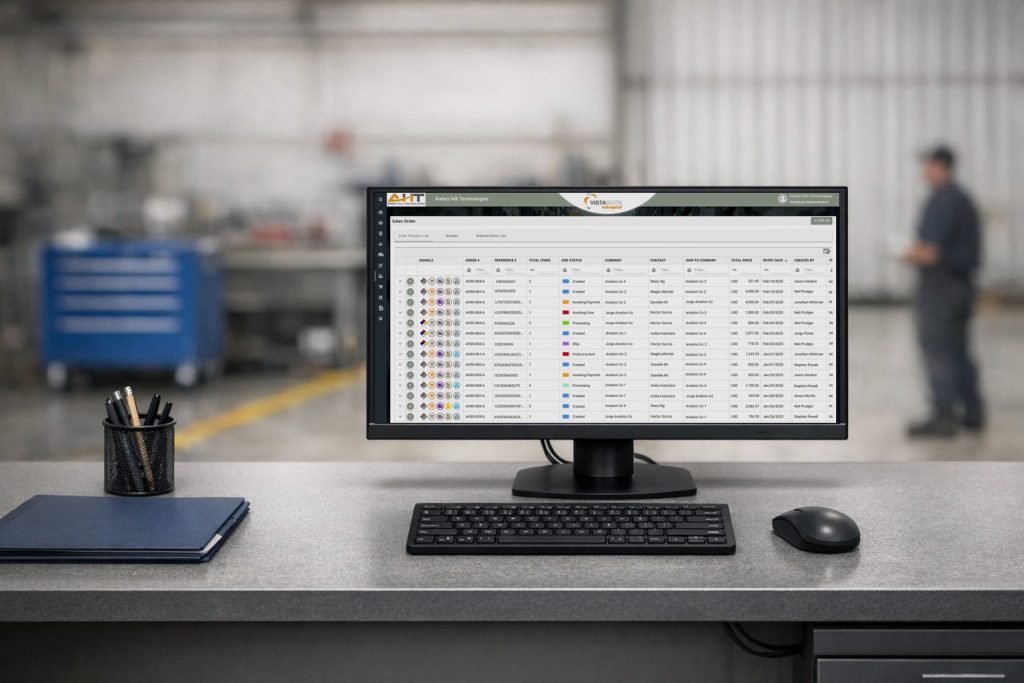
Vista-Suite Enterprise Keeps Inventory Context Close to the Decision
Vista-Suite Enterprise supports aircraft parts inventory, purchase order, repair order, receiving, and reporting workflows in one platform. Its inventory views quickly surface regular inventory alongside alternate records, pending inbound material, and pool primary records. Historical views remain accessible from the part or inventory record, reducing the need to leave the working area for routine research.
Customer-owned material clearly displays ownership identification to ensure clarity in consignment. Freight and other auxiliary charges can be applied directly to inventory records, so the cost details remain connected to the item and its workflow.
With Vista-Suite Enterprise, your warehouse gets fast answers to the questions that drive daily work: Is it available? Who owns it? What is pending? What has happened to it? What does it cost?
Request a live demonstration at ambryhill.com/demo
FAQ
What causes aircraft parts inventory inaccuracies?
Inaccuracies often begin when quantity, location, availability, ownership, condition, or transaction status is recorded in different places. The physical count may be correct while the operational interpretation is not.
How do pending purchase and repair orders affect inventory availability?
Pending material can help teams plan, but it should not be confused with inventory ready for allocation or shipment. A useful view separates what is physically available from what is expected through purchasing, receiving, or repair activity.
How should customer-owned aircraft parts be managed?
Ownership should be visible on the inventory record and remain clear as the material moves through receiving, repair, work orders, storage, and return. Notes maintained outside the normal workflow are easy to miss.
Which costs should be associated with an aircraft part?
The applicable costs depend on company policy and the transaction, but they may include acquisition, freight, inspection, outside repair, crate work, and internal labor. Finance should define the accounting treatment; operations should capture the supporting context when the activity occurs.